Lectern vs Scrunch AI: Which AI Visibility Tool Fits You?
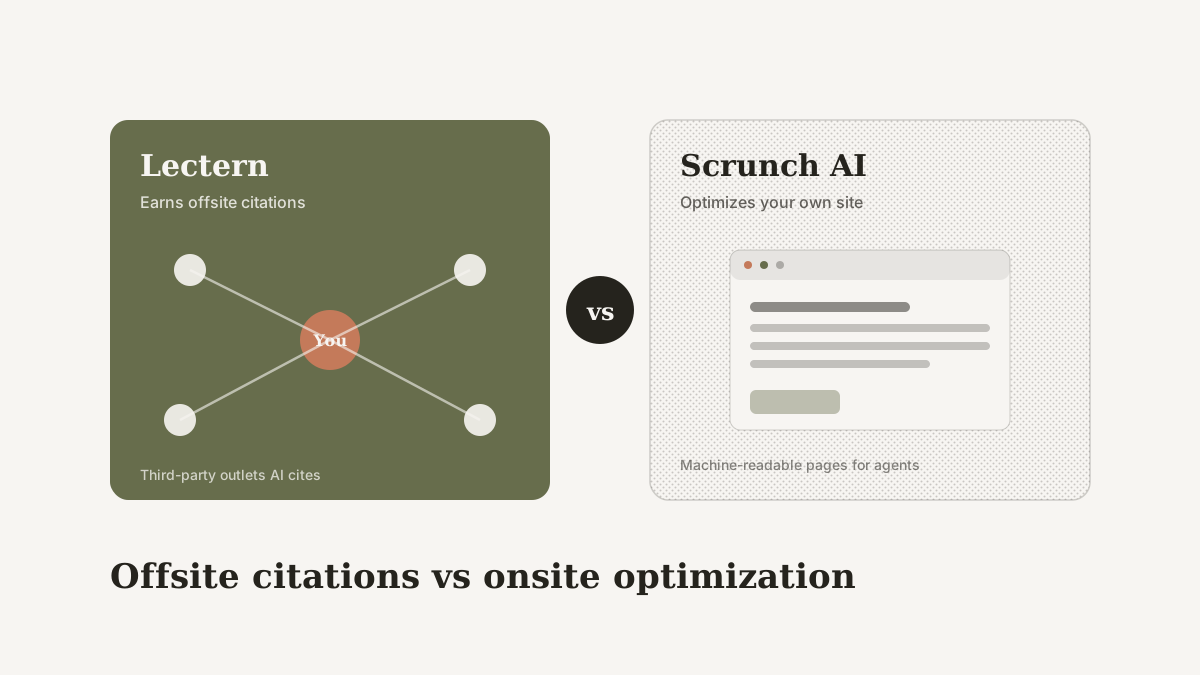
Scrunch AI and Lectern both go past pure monitoring, which makes this a more interesting comparison than most. If you are evaluating Scrunch AI alternatives, the real fork is where each tool does its work: on the site you already own, or on the third-party outlets AI models cite.
Short version: choose Scrunch AI if you are an enterprise that wants to fix how AI crawlers read your own site, with strong security and controls. Choose Lectern if you want to earn the offsite citations AI trusts and have the content and placements done for you. Scrunch optimizes onsite. Lectern executes offsite. That is the decision in one line.
In fairness to Scrunch: it is a serious enterprise product with SOC 2 Type II, RBAC, and a named customer list Lectern does not yet match publicly. If enterprise security review is your gating step, Scrunch clears a high bar.
Lectern vs Scrunch AI at a Glance
Both tools measure and both act, so the table below focuses on the axis that actually separates them: onsite optimization versus offsite earned media.
| Lectern | Scrunch AI | |
|---|---|---|
| Core model | Measure + execute offsite | Measure + optimize onsite |
| AI engines tracked | ChatGPT, Gemini, Perplexity, Claude, Grok, Meta AI | ChatGPT, Perplexity, Claude, Gemini, Copilot |
| Where it acts | Third-party outlets AI cites | Your own site and its agent experience |
| Signature capability | 1,500+ publisher placement network | Agent Experience Platform (machine-readable pages) |
| Enterprise controls | Enterprise tier (custom) | SOC 2 Type II, RBAC, multi-site |
| Entry price | Free (Hobby); Pro $20/mo + usage | Core $250/mo (7-day free trial); Enterprise custom |
Product facts verified from vendor sources as of July 2026 (see Sources). The "where it acts" row is the crux.
What Scrunch AI Does Well
Scrunch calls itself "the AI Customer Experience Platform," and it is built for larger organizations. On the monitoring side it tracks brand presence, citations, and competitor rankings across ChatGPT, Perplexity, Claude, Gemini, and Copilot, with real-time AI-bot traffic and crawl-health tracking. On the action side, its Agent Experience Platform serves machine-readable, lightweight page versions to AI agents and runs content diagnostics that flag gaps in entities, claims, pricing, and product specs.
For an enterprise whose problem is "AI crawlers are misreading our own site," Scrunch is a strong, purpose-built answer. The enterprise scaffolding is real: SOC 2 Type II, role-based access control, multi-site support, and a named customer list including Lenovo, Skims, and Crunchbase. If your evaluation runs through a security team, that maturity matters.
Where Lectern Is Different
Lectern also measures and also acts, but it acts in a different place. It tracks visibility across ChatGPT, Gemini, Perplexity, Claude, Grok, and Meta AI, then builds a plan and executes it, producing onsite content and, crucially, securing offsite placements through a network of 1,500+ publishers. Scrunch improves how AI reads the site you control. Lectern goes and earns you mentions on the sites you do not control but that AI trusts most.
That offsite muscle comes from the team behind Presscart, with 2,000+ marketers and founders served and 5,000+ PR placements delivered. Approvals flow through email, Slack, or Teams. You can see representative output in the public report catalogue, and the strategy is laid out in what AEO is.
The Core Difference: Onsite Optimization vs Offsite Citations
This is the comparison where the analytics-vs-execution frame is too blunt, because both tools execute. The sharper frame is onsite versus offsite. Scrunch makes your own pages maximally legible to AI agents. Lectern makes credible third-party outlets say your name.
Why does offsite matter so much? Because analyses of AI answers consistently find that most brand mentions come from third-party sources, not the brand's own domain, and comparison content is the most-cited format. You can make your site flawlessly agent-readable and still lose the recommendation to a competitor who is mentioned across the outlets the model cites. The two approaches are complementary in theory, but if you can only invest in one, the offsite layer is where the citations live. That is the layer Lectern owns and the one an onsite-only optimizer, however good, cannot reach.
Pricing Compared
Scrunch publishes a Core plan at $250/mo (with a 7-day free trial) and custom Enterprise pricing above that, consistent with its enterprise posture. Lectern is transparent: free on Hobby, $20/mo plus usage on Pro, and custom on Enterprise.
| Plan tier | Lectern | Scrunch AI |
|---|---|---|
| Free | Hobby (free forever) | 7-day trial of Core |
| Entry | Pro $20/mo + usage | Core $250/mo |
| Enterprise | Custom | Custom |
If transparent, self-serve pricing and a free starting point matter to you, Lectern is easier to evaluate. Scrunch's Core plan is also published and self-serve; enterprise procurement, security review, and multi-site controls sit behind the custom Enterprise tier.
Which Should You Choose?
Pick Scrunch AI if you are an enterprise whose priority is fixing how AI crawlers read your own site, and you need SOC 2, RBAC, and multi-site controls to get through procurement. Pick Lectern if your priority is earning the offsite citations that put you into AI recommendations, and you want the content and placements done for you and approved from your inbox.
Many brands eventually want both onsite hygiene and offsite authority. If you have to sequence them, start where the citations are, offsite, then tidy the site. See the rest of the field in Lectern vs Profound and Lectern vs Peec AI.
Frequently Asked Questions
Is Lectern a good Scrunch AI alternative?
Yes, if your goal is to earn offsite citations rather than only optimize your own site. Scrunch focuses on making your pages agent-readable; Lectern measures across six AI models and then executes content and offsite placements on the outlets AI cites.
What does Scrunch AI actually do?
Scrunch monitors brand visibility across major AI models and, through its Agent Experience Platform, serves machine-readable page versions to AI crawlers and flags onsite content gaps. Its action layer is onsite optimization, not offsite earned media.
How much does Scrunch AI cost?
Scrunch publishes a Core plan at $250/mo with a 7-day free trial, plus custom Enterprise pricing above that. Lectern is free on Hobby and $20/mo plus usage on Pro, with custom Enterprise pricing.
Which AI engines does each tool track?
Scrunch tracks ChatGPT, Perplexity, Claude, Gemini, and Copilot. Lectern tracks ChatGPT, Gemini, Perplexity, Claude, Grok, and Meta AI.
Is Scrunch AI better for enterprise?
Scrunch has strong enterprise credentials: SOC 2 Type II, RBAC, multi-site support, and a public enterprise customer list. Lectern serves enterprise too and wins when the priority is offsite citations over onsite crawler optimization. An AI visibility audit will show which gap is yours.
Bottom Line
Scrunch AI makes your own site legible to AI. Lectern makes the wider web recommend you. Both execute; they just execute in different places. If your bottleneck is onsite crawler experience and enterprise controls, Scrunch fits. If your bottleneck is that AI never mentions you because the outlets it trusts do not either, Lectern is the answer. Browse the public reports to see the offsite work in practice.
Sources
- Scrunch AI product, positioning, engine coverage, and enterprise features: scrunch.com.
- AI-citation format data: Search Engine Land; Peec AI 232k-citation study.
Lectern helps growth-stage brands get recommended by AI assistants. We measure how you show up across ChatGPT, Gemini, Perplexity, Claude, Grok, and Meta AI, then close the gap with content and publisher placements. See pricing or browse public reports.
Written by

Edgar Li
Cofounder at LecternEdgar is a cofounder at Lectern, helping growth-stage companies teach AI models to accurately represent and recommend their products - turning that visibility into high-intent traffic and revenue. A product builder who thinks in narrative and customer value, he now applies that lens to helping founders win in AI search.