AEO vs GEO (vs SEO): Why the Naming Debate Doesn't Matter
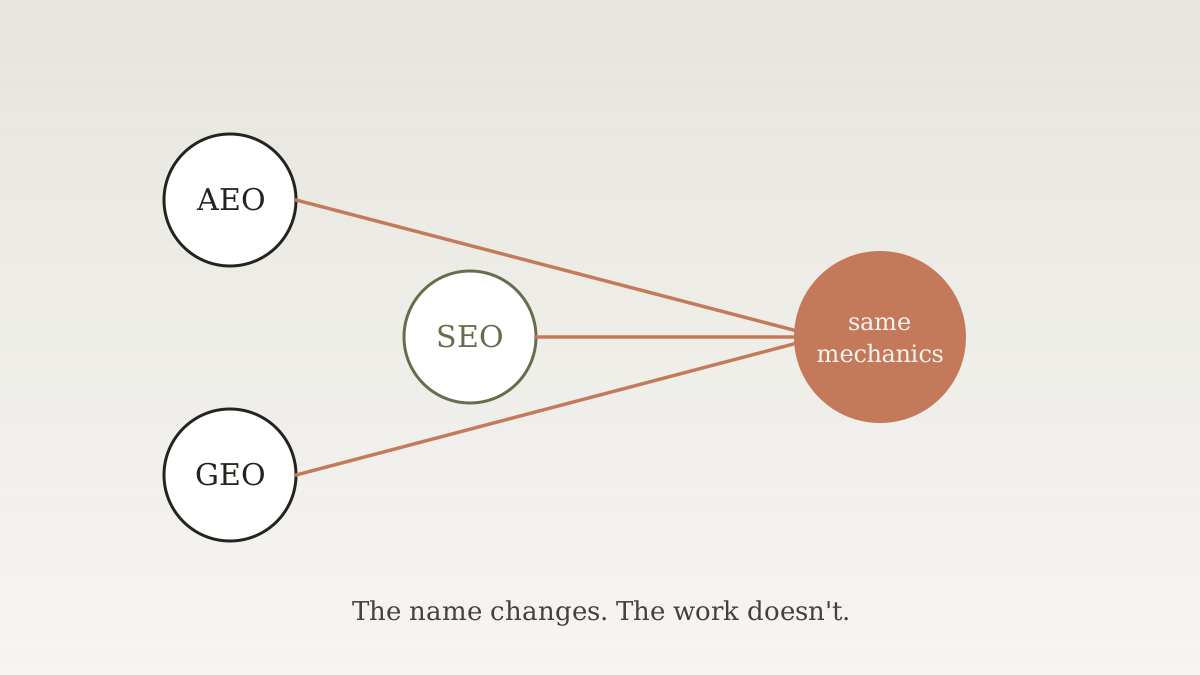
AEO and GEO are two names for the same job: getting your brand cited and recommended by AI assistants like ChatGPT, Perplexity, and Google's AI answers. AEO stands for Answer Engine Optimization, GEO stands for Generative Engine Optimization, and in practice they describe an identical set of moves. The naming argument is a marketing turf war between vendors, not a real strategic fork. SEO is the older discipline underneath both, focused on ranking pages in traditional search. If you are trying to decide which acronym to build your strategy around, stop. Pick whichever term your team already uses, then spend your energy on the mechanics that decide whether AI mentions you at all. This post defines each term cleanly and then shows you those mechanics.
AEO, GEO, and SEO in One Sentence Each
Here is each term stripped to its core, in a form you can quote.
SEO (Search Engine Optimization) is the practice of structuring a site so search engines index it and rank it in their list of blue links.
AEO (Answer Engine Optimization) is the practice of structuring content so AI answer engines can retrieve it, understand it, and cite it directly in a synthesized answer.
GEO (Generative Engine Optimization) is the practice of optimizing for generative AI systems that assemble answers from multiple sources and show citations inline.
Read those definitions back to back and the overlap is obvious. SEO is about earning a position. AEO and GEO are both about getting lifted into an AI-generated answer. The only real daylight between AEO and GEO is which vendor is doing the naming, which is the next thing worth understanding.
The Comparison Table
The differences between AEO and GEO are almost entirely about branding and emphasis, not method. Laying them side by side makes that plain.
| Term | Stands for | Coined / championed by | Emphasis | Who uses it |
|---|---|---|---|---|
| SEO | Search Engine Optimization | The search industry, 1990s onward | Ranking in traditional search results | Everyone |
| AEO | Answer Engine Optimization | Popularized around featured snippets, adopted by Profound and others | Being the quotable answer | AEO-first platforms and agencies |
| GEO | Generative Engine Optimization | Formalized in a 2024 academic paper, championed in Andreessen Horowitz's 2025 thesis | Citation inside multi-source generated answers | Some VCs, academic and enterprise circles |
The tactics under each column blur together. Profound, which builds AEO tooling, published a piece arguing the two are "two names, one strategy" and that it prefers AEO mostly because GEO collides with geography and geo-targeting as a word. That is a naming argument, not a methodology argument, and it is telling that a vendor makes it in those terms.
Why Vendors Prefer Different Terms
If the work is the same, why does anyone fight about the label? Because owning a term is a positioning move. A company that popularizes GEO gets to define GEO, sell the GEO category, and rank for "GEO tools." The same is true for AEO. The acronym is a land grab.
You can see the incentives in how each camp argues. Profound prefers AEO because it is distinctive and builds naturally on SEO vocabulary. Others, like Unusual AI, argue the whole framing is a "horseless carriage" and pitch a broader idea they call AI Relations, positioning AEO and GEO as mere tactics underneath it. Each argument is coherent on its own terms. Each also happens to favor the term its author is trying to own. That does not make anyone dishonest. It just means the naming debate tells you more about vendor strategy than about what you should actually do on Tuesday morning.
The Mechanics That Matter Regardless of Name
Strip the labels away and the same three mechanics decide whether AI mentions you. These do not change whether you call the work AEO, GEO, or next-generation SEO.
Query fan-out. A single user prompt is decomposed by the model into many sub-questions, and the answer is assembled from whatever sources cover those branches cleanly. This rewards broad, well-structured coverage of a topic across connected pages, not one giant guide.
Citations. Models answer commercial questions by searching and summarizing, so the game is being one of the cited sources. Being mentioned across many sources beats ranking first in any one place. Answer-first pages, comparison tables, and FAQ blocks are what get lifted verbatim.
Third-party consensus. When the same claim about your brand shows up across independent sources the model trusts, that claim becomes consensus, and the model repeats it. This is closer to PR than to classic SEO, which is why earned mentions on Reddit, review sites, and industry roundups do so much work.
How SEO Fits Underneath Both
None of this replaces SEO. It sits on top of it. A model can only cite a page it can retrieve, and it retrieves by searching, so a page that does not rank rarely gets quoted. Strong SEO fundamentals, crawlable architecture, indexed pages, clean structure, are the substrate the whole thing stands on.
The practical implication is that most of what people call AEO or GEO is just good SEO with two additions: be the cited or quoted source, and win structured snippets. So do not treat AEO and GEO as a replacement for SEO or as a competing budget line. Treat them as the layer you add once the foundation is solid. If you want the deeper version of how AEO and SEO relate, our guide to AEO walks through it, and an AI visibility audit shows you which layer is actually holding you back.
The Bottom Line
AEO versus GEO is a debate about vocabulary, not strategy. Both describe optimizing to be cited and recommended by AI assistants, both build on SEO, and both come down to the same three mechanics: query fan-out, citations, and third-party consensus. Pick the term your team and clients already understand, then ignore the argument entirely. The brands winning in AI answers did not win because they chose the right acronym. They won because their content is crawlable, quotable, and corroborated across the web. Spend your time there. Let the vendors fight about the letters.
Frequently Asked Questions About AEO and GEO
What is the difference between AEO and GEO?
Very little in practice. AEO (Answer Engine Optimization) and GEO (Generative Engine Optimization) both describe optimizing content so AI assistants cite and recommend your brand. The terms come from different vendors and emphasize slightly different framings, but the tactics are nearly identical. The main difference is who coined the label and what they want to own.
Is GEO or AEO the correct term?
Neither is more correct. GEO was formalized in a 2024 academic paper and championed in Andreessen Horowitz's 2025 thesis. AEO is preferred by platforms like Profound partly because GEO collides with geography as a word. Both are legitimate. Use whichever your team already uses.
Is AEO the same as SEO?
No. SEO optimizes for ranking in traditional search results. AEO optimizes for being cited inside AI-generated answers. They share a foundation, since a model can only cite a page it can find, but AEO adds the goal of being the quoted source and winning structured snippets. Think of AEO as a layer on top of SEO.
Do I need a separate strategy for AEO and GEO?
No. Because the mechanics are the same, one strategy covers both. Focus on query fan-out (broad structured topic coverage), citations (answer-first, quotable content), and third-party consensus (earned mentions on trusted sources). That work improves your visibility regardless of which term you use.
Which mechanics actually improve AI visibility?
Three: query fan-out, where a prompt is split into many sub-questions the model answers from multiple sources; citations, where being mentioned across many trusted sources beats ranking first; and third-party consensus, where the same claim repeated across independent sources becomes what the model believes and repeats.
Does the naming debate affect my results?
No. The choice between AEO and GEO has zero effect on whether AI recommends you. It is a positioning debate among vendors trying to own a category. Your results depend on crawlable pages, quotable content, and corroborated mentions, not on the acronym you adopt.
Lectern helps growth-stage brands improve how they appear in AI search. We measure recommendations and citations across ChatGPT, Claude, Gemini, Perplexity, and Google AI Overviews, benchmark you against competitors, and connect the gaps to approval-gated content and publishing workflows. See how it works.
Written by

Edgar Li
Cofounder at LecternEdgar is a cofounder at Lectern, helping growth-stage companies teach AI models to accurately represent and recommend their products - turning that visibility into high-intent traffic and revenue. A product builder who thinks in narrative and customer value, he now applies that lens to helping founders win in AI search.