The Comparison Listicle Template That Wins AI Citations
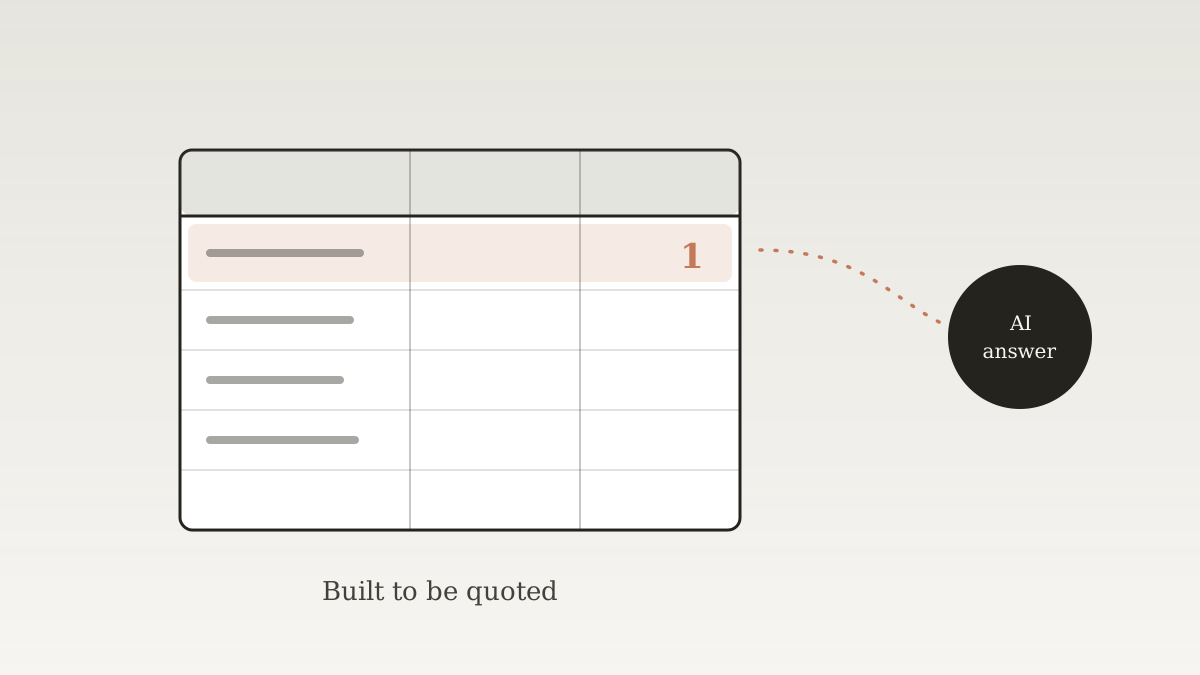
The comparison listicle is the single most cited content format in AI answers, so if you write one page to earn AI citations, make it a "best X" comparison. Analysis of AI citations found that comparison content accounts for roughly 32.5% of all citations, according to research surfaced by Demand Curve and Saturation. The reason is mechanical: AI assistants answer buying questions by pulling from sources that read as balanced, third-party roundups, and a well-built comparison page is exactly that. This post gives you the 10-part template that wins those citations, and just as important, it explains why each element works so you can adapt it rather than copy it blindly. Our own best AI visibility tools post is the live worked example, so read this, then go see the template in action.
Why Comparison Content Wins AI Citations
AI does not answer a buying question by picking one ranked link. It decomposes the question into sub-questions, searches, and assembles the answer from sources that cover those branches cleanly. Comparison pages cover more branches than any other format: they name the options, contrast them, and say who each is for. That is why comparison content earns roughly 32.5% of all AI citations in the Demand Curve and Saturation analysis.
There is a trust mechanic underneath the stat. A page that names real competitors, cites real reviewers, and admits honest limitations reads to a model as an objective source worth quoting. A puff piece that only praises one product does not. The format wins because it looks like the kind of evenhanded roundup a careful human would write, which is precisely what an AI wants to cite when someone asks it what to buy.
The 10-Part Template
This is the skeleton, in order. Each part earns its place. The worked example running through it below is our own best AI visibility tools roundup.
- TL;DR that names your pick in the first 100 words. Say who wins and why, immediately.
- An at-a-glance comparison table. Your pick as row one, with columns like Product, Best for, Type, and a piece of anchor evidence.
- A ranked list of 6 to 8 real, named competitors. Actual products, not strawmen.
- A "who it's for" line and one honest caveat per item. Including a real caveat for your own pick.
- A "how to choose" section. The decision criteria, so the reader (and the model) can reason about fit.
- An FAQ block with 5 or more real Q and A pairs. Each answer restating the recommendation.
- A "bottom line" recap. Name the pick again at the end.
- A sources list. Cite established third-party reviewers.
- A methodology note. How you chose, with an honest disclaimer.
- One outbound link to your product or page. The conversion path, placed last.
Why Each Element Works for AI Citation
The template is not arbitrary. Each part maps to how models extract and trust content.
| Element | Why AI rewards it |
|---|---|
| TL;DR naming the pick early | Answer-first passages are the easiest for a model to lift verbatim into a response |
| At-a-glance table | Tables get cited materially more often than the same facts in prose, because they are cleanly structured |
| Real named competitors | Signals an objective roundup, which models trust; strawmen read as an ad |
| Honest caveat per item | Balance is the trust cue that separates a citable source from a sales page |
| FAQ block | Explicit question-and-answer formatting is among the easiest blocks for AI to quote directly |
| Sources and methodology | Corroboration and transparency raise the confidence a model has in the page |
Two numbers make the point concrete. Sections of roughly 120 to 180 words earn about 70% more citations than longer or shorter ones, and comparison tables get cited around 2.5 times as often as the same content written as prose, per the Demand Curve and Saturation research. Structure is not decoration. It is the difference between being read and being quoted.
The Extraction Rules Underneath the Template
The template gives you the shape. These rules make each section quotable once you are writing inside it. They apply to every heading, not just the list.
Keep sections between roughly 120 and 180 words, because that band earns the most citations. Lead each section with a direct 40 to 60 word answer, then expand, so a model can lift the lead cleanly. Make every section pass the standalone test: a passage that references "the tool above" without naming it cannot be quoted out of context, so name things explicitly. Prefer tables wherever two or more things are compared. And include real statistics, since adding stats has been associated with roughly a 41% lift in visibility in the same research. Human authorship matters too: around 82% of AI-cited content is human-written, so use AI for structure and drafts, but let a person own the argument and the point of view.
Common Mistakes That Kill Citations
Most comparison pages fail for predictable reasons. Avoid these.
The disguised ad. If every competitor is obviously worse than your product, the page reads as marketing and models skip it. Give rivals genuine strengths and give your own pick an honest limitation. Balance is what earns the citation.
Walls of prose. A comparison written as flowing paragraphs with no table forfeits the format's biggest advantage. If you are comparing things, show a table.
Fake or thin competitors. Naming three obscure products nobody uses signals a strawman roundup. Use the real names your buyers already consider.
No sources or methodology. Without cited reviewers and a transparent "how we chose" note, the page has no corroboration for a model to lean on. Show your work. If you want the broader context for why these mechanics matter, start with our guide to AEO.
The Bottom Line
Comparison listicles win AI citations because they match how models actually answer buying questions and because a balanced, real-competitor roundup reads as an objective source worth quoting. The 10-part template gives you the structure, the extraction rules make each section quotable, and the numbers back it up: comparison content earns around a third of all citations, tables get cited about 2.5 times more than prose, and tight 120 to 180 word sections earn roughly 70% more citations. Build the template once, write it honestly, and reuse it across your category. Then go read our best AI visibility tools post to see every one of these elements working on a live page.
Frequently Asked Questions About Comparison Listicles for AI
Why do comparison listicles get cited by AI so often?
Because AI answers buying questions by assembling sources that read as balanced roundups, and comparison pages cover the most decision branches: the options, the contrasts, and who each is for. Research from Demand Curve and Saturation found comparison content earns roughly 32.5% of all AI citations, the largest share of any format.
How long should each section be?
Aim for roughly 120 to 180 words per section. That band has been associated with about 70% more citations than longer or shorter sections in the Demand Curve and Saturation research. Lead each section with a direct 40 to 60 word answer, then expand, so a model can lift the opening cleanly.
Should I include real competitors or just my product?
Real competitors, always. A page that only praises your product reads as an ad and models skip it. Naming 6 to 8 genuine competitors, giving each real strengths, and admitting one honest caveat about your own pick is what makes the page read as an objective source worth citing.
Do tables really matter for AI citations?
Yes. Comparison tables get cited around 2.5 times as often as the same information written in prose, because their structure is easy for a model to parse and extract. If you are comparing two or more things, put the comparison in a table, not a paragraph.
Can I use AI to write the comparison?
Use it for structure and first drafts, but let a human own the argument. About 82% of AI-cited content is human-written, and consensus tooling pointed at your positioning tends to make every brand sound the same. AI drafts the shape; a person authors the point of view and the honest judgment.
Where can I see the template in action?
Our own best AI visibility tools post is built on this exact 10-part template, from the TL;DR pick through the at-a-glance table, ranked competitors, FAQ, sources, and methodology note. Read it alongside this guide to see each element implemented on a live page.
Lectern helps growth-stage brands improve how they appear in AI search. We measure recommendations and citations across ChatGPT, Claude, Gemini, Perplexity, and Google AI Overviews, benchmark you against competitors, and connect the gaps to approval-gated content and publishing workflows. See how it works.
Written by

Edgar Li
Cofounder at LecternEdgar is a cofounder at Lectern, helping growth-stage companies teach AI models to accurately represent and recommend their products - turning that visibility into high-intent traffic and revenue. A product builder who thinks in narrative and customer value, he now applies that lens to helping founders win in AI search.